Monday, March 14, 2011

Making Mobile Calls While Traveling - Without Selling The House

I am currently making plans for my next trip, to Greece.  Since I will be doing the accommodation reservations on the go, there will be more phone calls than usual when travelling. Yet when I checked the roaming call rates of my cellular provider (Orange), I was in for a surprise - above 11 NIS/min for calls inside Greece and 20 NIS/min to Israel (10.2 with a "Global Savings" program). 

Since I don't intend the phone bill to be more expensive than the flight ticket, I went looking for a better option. The short version is that getting a SIM card with the SIM 014 program by Bezeq International seems to give the best rates (2.09 NIS/min in Greece), with 013SIM by 013 Netvision being a good alternative.

Generally there are two kinds of products for international mobile calls - Pre-Paid and Post-Paid. 

Pre-Paid means you are buying a "calling card" ahead of time, charged with a certain amount of "units" or sum of money. You use a special number when calling and the card number, until you've run out of credit, and need to buy another card, or charge your account with additional sum. The advantage here is the control over your spending, since you can never pay more then the value of the card. But I don't like the more difficult process of making the call, and that you can run out of credit in the middle of a conversation. Also, you have to commit ahead of time to a certain amount of call minutes, and even if you don't use them all they expire after a while.

Post-Paid means you pay per-usage with your credit card. You buy a new SIM card (a one time charge) and just use it normally - including storing your contact numbers on it, etc. With many programs, you can buy an international SIM card once, and use it for years, from many countries. I like the simplicity of this.

There's a good article (by kamaze.co.il) comparing the different services offered in Israel. I made a online spreadsheet which summarizes the ones I liked, and compared the initial price and the calling rates from several countries which I am planning to visit in the future. Another option which is not included is buying a local Greek SIM card, which might have a little lower initial price and rates, but will only be useful inside Greece and I won't be able to use it in later trips.

In the end, the SIM 013 has the lowest initial price, but  SIM 014 program by Bezeq International has the best rates and over time will be cheaper. 


Friday, March 4, 2011

What Are You Collecting?

I've been thinking recently about stuff we tend to accumulate over time.

My father for example is quite the handyman in the house - he can fix a door, lay a cable across the apartment, fix an electrical appliance, etc. Over the years, he gathered a variety of tools and accessories for different tasks, and he always has the right one for the job as well as the skill to use it correctly.

My mother has a sewing machine, and when she has the time, can make a nice piece of clothing or fix one, or perhaps make some pretty pillow covers for the living room. And she got, stored around the house, various fabrics, magazine cutouts with designs, threads, buttons and all the other accessories.

Why am I writing this? I've just been upgrading my computer and as always, as I was preparing to put in the new parts, I got out a big storage box. There, I got a variety of parts, cables, connectors, power adapters and many other components I have accumulated over the last 15 years or more, from every computer I assembled for myself or relatives, every gadget or piece of electronics bought. And it does come very handy at times, when you need to replace a broken CPU fan, test if some component is faulty by putting another one instead, or even when you just need a rather weird type of screw for the computer case.

What do you have gathering dust in some storage box?

Sunday, February 27, 2011

Bringing Old Family Photos Back To Life

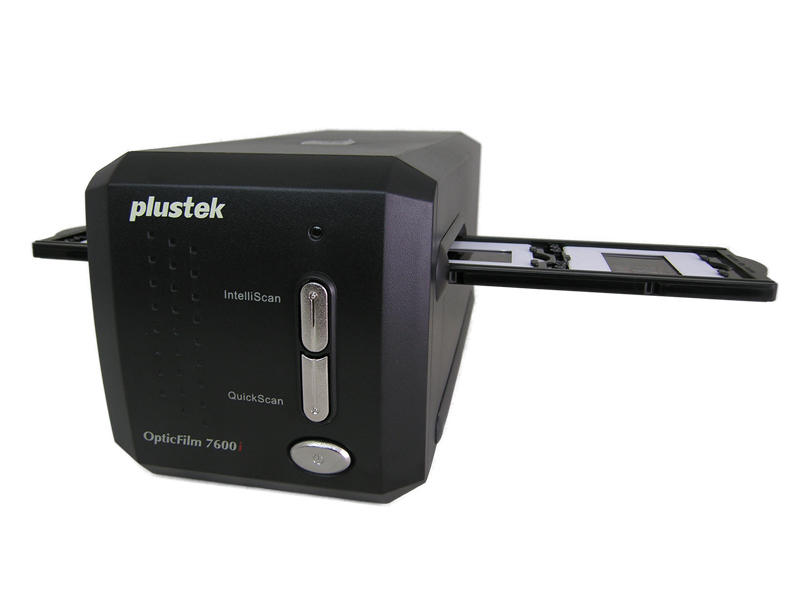
I've been going through some albums and photos recently, and found a box with a bunch of films. After a more careful look, I saw these were our old family photos - developed films from the last 20 years as well as slides that were 30 years old and more. A few of those were printed, and maybe we had them in an album somewhere, but mostly they are no longer available for us, and the means to reproduce them are disappearing with the years.

So I decided to bring them back from the confines of this box and digitize them. My options were limited however - there are several photo labs that can still scan films and slides, but the problem is cost and image resolution. The basic scan produces images of about 1.5 megapixels which is rather useless, and for a reasonable resolution of about 2000x3000 (6 megapixels) the cost to scan all we had (some 35 films and 70 single slides) would be in the thousands of shekels. 

After looking for other options, I found that although it will take some more time and effort on my part, it's better to purchase a dedicated film/slide scanner by myself and sell it second hand later when I'm done. This will be both cheaper and allow me to scan those family photos at the best possible quality. After some research, my current choice is this model - Plustek 7600i SE, which has good resolution and a mechanism for detecting and removing dust and scratches from the scan based on an additional infra-red scan of the film.

Hopefully I'll be done in a month or so, and we'll be able to look easily at our old family photos again.

Monday, January 3, 2011

Parsing a time that doesn't exist

I've been working on an integration project recently, using TIBCO BusinessWorks, and encountered an amusing bug. The code was parsing a bunch of date/time strings, and would works correctly except for a very small number of cases where it would fail with some 'Unparseable date' error. It would work for '26/03/2010 03:20' or '26/03/2010 01:20' for example, but fail for '26/03/2010 02:20'.

After some trial and error, head-scratching and Googling the problem was found - the system function used was implemented internally with java.text.SimpleDateFormat, and since the time string didn't specify the timezone the code assumed some timezone (based on locale I guess) that took DST (Daylight Saving Time) into consideration. So in this timezone, when at 26/03/2010 02:00 the clock advanced to 26/03/2010 03:00, the entire hour in between simply didn't exists and this timestamp couldn't be parsed. The solution was to specify a timezone which ignores DST, such as GMT, and in this particular case was done by appending " GMT+02:00" to the string. 

So much for the time continuity...

Saturday, December 25, 2010

Goodbye Nokia, Hello Android and Nexus S

These are my thoughts as I'm waiting for my shiny new Nexus S, which I ordered from US a few days ago, to land in Israel.

I've been a Nokia kind of guy for many years now, since my first mobile phone. Nokia phones had a simple button layout, consistent user interface and menus which made it easy to use whatever model you had. When I looked for my first smartphone a couple of years ago - I eagerly waited for the Nokia 5800. It's a great phone which served me well despite a few quirks, but now is showing its age and not in a way that some next model can fix.

What I mean is that as years went by, smartphones became more and more our mobile personal computers, where most important are not just the original hardware and software but the apps you install later. And the Symbian OS Nokia uses is rather old and hard to develop for, so almost none of the apps developed in the last year or two that I wanted could be installed on my phone. And even though I don't know much about Meego, the mobile OS Nokia will using for future smartphones - I think it will be too late. All apps today are developed for iPhone and Android first due to their market share, and it's hard for me to imagine what technical advantages might the Linux-based Meego have over Andorid, which is undergoing such fast development and improvement.

My parents are still using the simpler Nokia "feature-phones", since they are much more comfortable with the ordinary keys rather than a touchscreen, and there Nokia might hold its dominance for some time. This is a low margin market which addresses the much larger world population that can't afford the luxury of a smartphone. Yet as all technology goes, this will also get cheaper in a very short period, and soon enough I think there will be cheap Android based smartphones available for this large market.

So I say goodbye to Nokia and hello to Android. What would you suggest for the eager owner of a fresh Android phone? What are the must-have apps or settings I should start with?